
SCJP: Sun Certified Programmer for Java Platform Study Guide: SE6:
>> Thursday, August 20, 2009
SCJP: Sun Certified Programmer for Java Platform Study Guide: SE6 to download follow the link below:


SCJP: Sun Certified Programmer for Java Platform Study Guide: SE6 to download follow the link below:
Developing Facebook Platform Applications with Rails You’ll do more than just study the Facebook API-you’ll get practical tips from an experienced Facebook developer. We’ll cover advanced techniques such as AJAX and asynchronous messaging, and you’ll see how to slash development time with facebooker, the leading Ruby library for Facebook Platform development. Together, we’ll build Karate Poke, a real Facebook Platform application, from configuration to deployment. You’ll get deep into Facebook requests right off the bat. From there, you’ll build the core of Karate Poke and then get a detailed look at the Facebook canvas and social features. We’ll finish by looking at advanced features and tips for handling millions of users. Developing for the Facebook Platform can seem like a different world at first. Developing Facebook Platform Applications with Rails is your tour guide. In his spare time, Mike is an avid runner. He has completed several marathons and hopes to eventually qualify for Boston. to download follow the link below: http://rapidshare.com/files/267910586/Devel.Facebook.Platf.Applica.with.Rails08.rar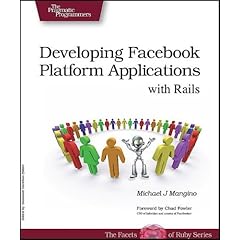
Product Description Sun’s enterprise Java™ platform, Java EE (Enterprise Edition), is getting a This book uses the new version of GlassFish™ 3 to deploy and administer the code examples. Written by an to download follow the link below: http://rapidshare.com/files/264945024/Beginning_java_ee_6_platform_with_glassfish_3_apress_2009.rar
Web Services Platform Addressing, WS-BPEL, WS- The Insider’s Guide to to download follow the link below: http://rapidshare.com/files/253254931/We_Services_Platform_Architecture.rar
The Adobe Flash platform contains two primary runtimes (see Figure 1). Flash Player is browser-based, and Adobe AIR is desktop-based. Because Adobe AIR is built on top of Flash Player, the Flash Player APIs are available within Adobe AIR. Consequently, Adobe AIR APIs are not available within Flash Player. The Flex framework is built on top of the Flash Player APIs, so it runs in both Flash Player and Adobe AIR. However, a number of Flex APIs take advantage of AIR APIs, and thus work only within Adobe AIR.
to download follow the link below:
With many of today’s games being released simultaneously on all platforms, the need for a good cross-platform development strategy is essential. Cross-Platform Game Programming covers this rarely discussed area and provides the techniques needed to develop your games effectively. It explains the plethora of problems that exist within every cross-platform game, and gives you the understanding and ability needed to solve them. It also teaches you how to write code that behaves identically on all machines. In addition, the book explains why standard libraries are not standard enough, and covers the nuances between compilers, debuggers, and operating systems. Throughout the book, how-to guidelines are provided for using the same code to handle different hardware specifications without change for ported games, or those being build to work cross-platform from the ground up. It helps senior and lead programmers determine where the platform-specific features should start and end, and provides methods for achieving this. It also includes support for those using middleware by demonstrating how to write code that will run identically on different machines, despite the platform making use of the same APIs. Because this book teaches the methods, not the API, it scales well for future platforms and empowers you to create your own designs. • BuildTools – Jam, the cross-platform build tool covered in Chapter 11 as an alternative to Makefiles • Graphics – OpenGL, GLUT, and Microsoft DirectX SDK • Utility Libraries – STLport, Boost, POSIX threads for Windows, and PLib • Scripting – Lua, source for the Lua interpreter and Lua compiler, and the basic Lua core required by both System Requirements IBM PC or 100% compatible, 128MB RAM (256MB recommended), 100MB of available hard-disk space (500MB additional space is required for the full DirectX SDK), and a copy of Microsoft Visual C++ version 6 or above. An Intel Pentium 90 Processor is required, although Pentium II or higher is recommended for the majority of the code. A Pentium III, 1 GHz is recommended for the DirectX SDK. Windows 98 SE or later is required with a VGA or higher-resolution monitor (Super VGA recommended). The DirectX SDK requires a DX9-compatible graphics card with suitable drivers and OpenGL. to download follow the link below:
 Free Directory
Pakistani Directory - Browse Pakistan
web directories
http://www.activesearchresults.com/ac.php?nTEWvxSAYZqy8cuiUnlgr9yZQSX5OTwPa726uLuv+VYCsNnJiKOpXw==directory submissionshttp://www.cheap-textbooks.com/cheap-textbooks.htm
26Portal.com
Free Directory
Pakistani Directory - Browse Pakistan
web directories
http://www.activesearchresults.com/ac.php?nTEWvxSAYZqy8cuiUnlgr9yZQSX5OTwPa726uLuv+VYCsNnJiKOpXw==directory submissionshttp://www.cheap-textbooks.com/cheap-textbooks.htm
26Portal.com
 artificial intelligenceFreeWebSubmission.com Directory Storm Directoryfree web directories


 Free Directory Submission - Link to Us
Friday, July 28, 2006
Just paste the following HTML codes to your blog.
Free Directory Submission - Link to Us
Friday, July 28, 2006
Just paste the following HTML codes to your blog.


